

The Power of Breathing: The Science‑Backed Way to Reduce Stress, Improve Focus, and Regulate Your Emotions
is the most natural thing we do — yet most of us rarely do it with intention.
In moments of stress, overwhelm, or emotional tension, our breath becomes shallow and irregular.
But when we breathe consciously, everything changes.
Modern research shows that breathwork is one of the fastest ways to calm the nervous system, improve emotional balance, and restore mental clarity. It’s a tool available to everyone, anywhere, at any moment.
In this article, we’ll explore the science behind breathwork, why it’s so effective, and how simple daily breathing practices can transform your wellbeing.

Why Breathing Affects Your Emotions and Stress Levels
Breathing is the only function in the body that is both automatic and under your control.
This makes it a direct gateway into your emotional and physiological state.
When you change your breath, you change your body’s chemistry.
The Autonomic Nervous System (ANS)
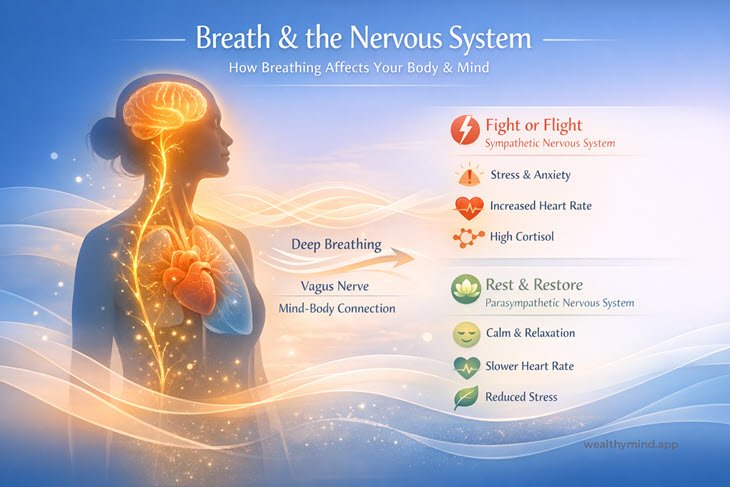
Your ANS controls your stress response and has two main branches:
Sympathetic Nervous System (SNS)
The “fight or flight” mode — activated by stress, fear, deadlines, and emotional triggers.
Parasympathetic Nervous System (PNS)
The “rest and restore” mode — activated by slow, deep, intentional breathing.
When you breathe consciously, you shift your body from stress to calm.
The Vagus Nerve: Your Internal Reset Button
The vagus nerve is the longest nerve in the body and plays a major role in emotional regulation.
Slow, rhythmic breathing stimulates the vagus nerve, which:
- Lowers heart rate
- Reduces cortisol
- Improves emotional stability
- Enhances resilience to stress
- Supports digestion and recovery
This is why breathwork is used in therapy, sports psychology, meditation, and trauma recovery.
The Science of Breathwork: What Research Shows
Breathwork is not a trend — it’s a scientifically validated practice with measurable benefits.
1. Reduces Stress and Anxiety
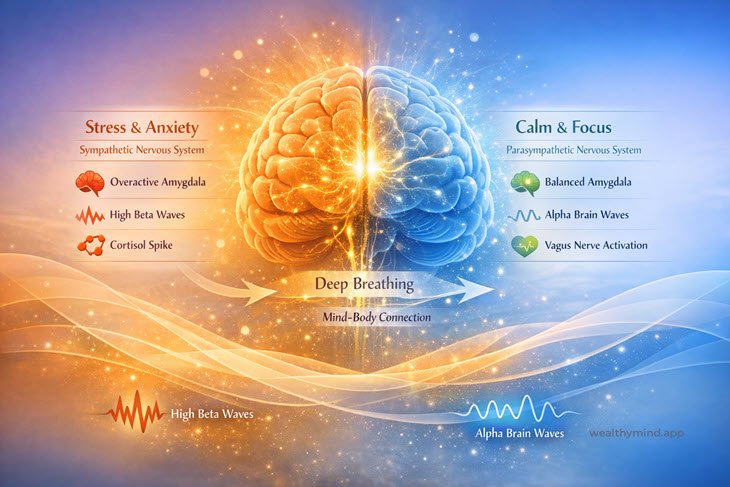
Studies show that slow breathing (around 6 breaths per minute) significantly reduces cortisol and increases heart rate variability — a key marker of emotional resilience.
2. Improves Focus and Cognitive Performance
Techniques like Box Breathing are used by Navy SEALs and athletes to sharpen concentration and stay calm under pressure.
3. Enhances Sleep Quality
Longer exhales activate the parasympathetic system, helping the body transition into rest.
4. Balances Emotions
Breathwork helps regulate the amygdala — the part of the brain responsible for emotional reactions.
5. Boosts Natural Energy
Certain breathing patterns increase oxygenation and stimulate alertness without caffeine.
6. Supports Heart and Lung Health
Controlled breathing improves lung capacity, oxygen efficiency, and cardiovascular function.
Simple Breathing Techniques You Can Start Today
Here are a few foundational techniques backed by research and easy for beginners.
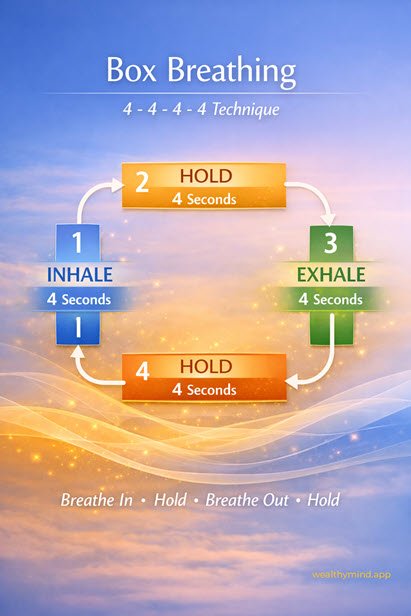
1. Box Breathing (4–4–4–4)
A powerful technique for calm and focus.
- Inhale 4 seconds
- Hold 4 seconds
- Exhale 4 seconds
- Hold 4 seconds
Used by athletes, military, and therapists.
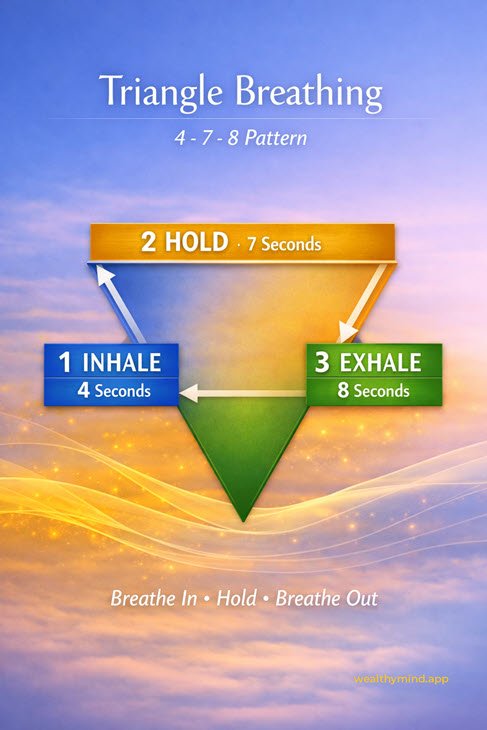
2. 4–7–8 Breathing
Excellent for sleep and anxiety relief.
- Inhale 4
- Hold 7
- Exhale 8
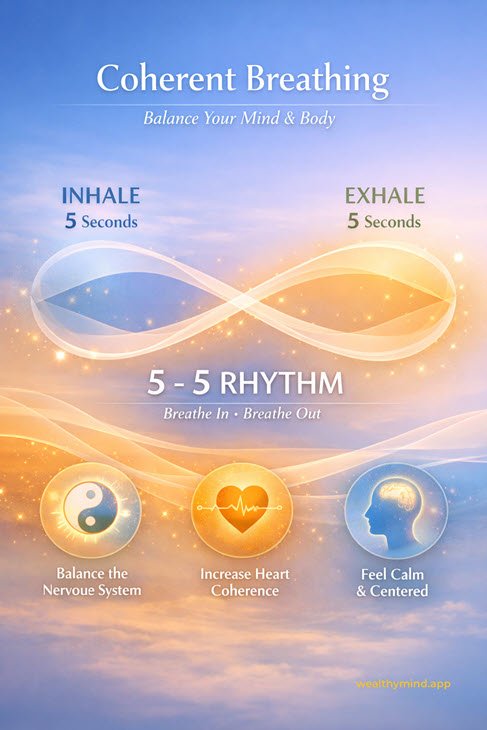
Coherent Breathing (5–6 breaths per minute)
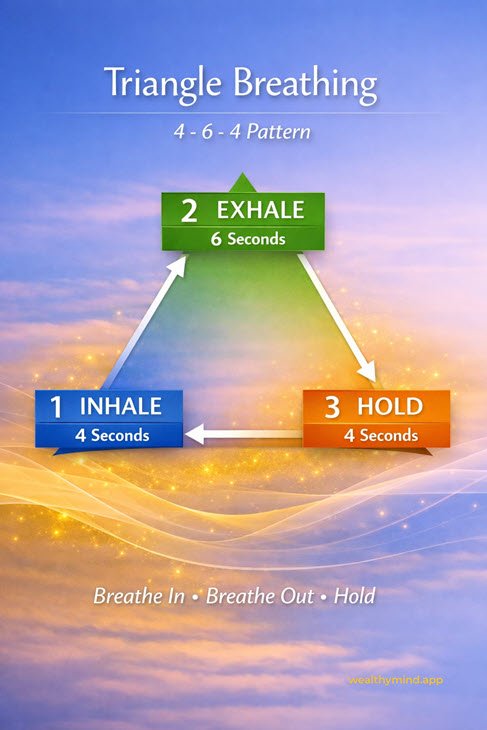
Triangle Breathing
A grounding technique for emotional clarity.
- Inhale
- Hold
- Exhale
Bringing Breathwork Into Your Daily Routine
Breathing is simple. The challenge is remembering to practice consistently.
That’s where guided tools can help.
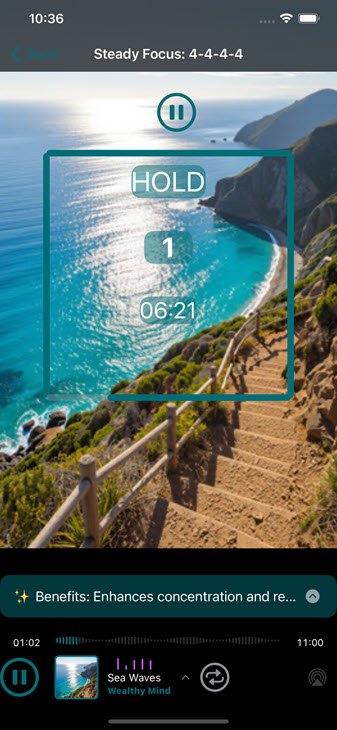
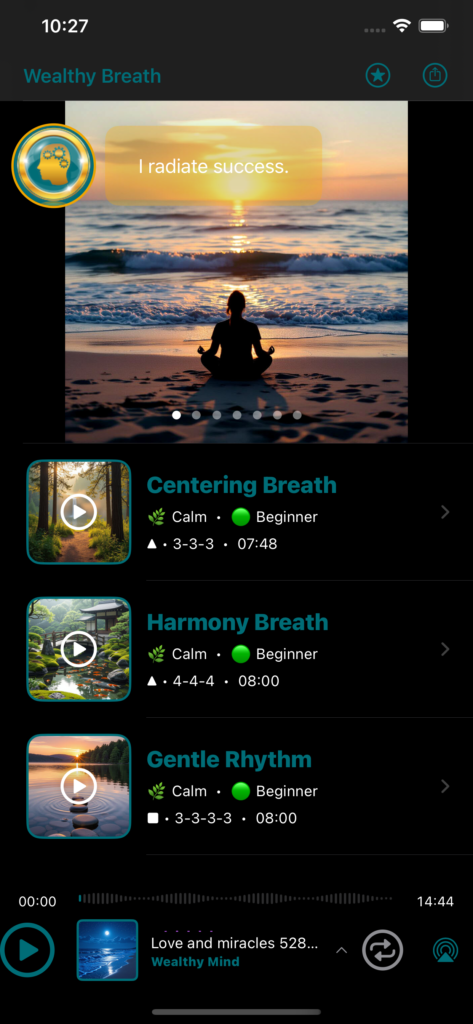
Wealthy Breath for iOS makes it easy to build a daily breathwork habit with guided exercises, visual pacing animations, voice cues, and immersive soundscapes designed to support relaxation, focus, sleep, and emotional balance.
Whether you’re looking to reduce stress, improve concentration, or create a few moments of calm in a busy day, having a structured guide can make all the difference.
Start Your Daily Breathwork Practice
You don’t need special equipment.
You don’t need experience.
You don’t need twenty minutes.
You simply need a few intentional breaths and a consistent practice.
Explore Wealthy Breath and discover how a few minutes of guided breathing each day can help support greater calm, focus, and resilience.
👉 Download Wealthy Breath on the App Store
Transform your emotional wellbeing — one breath at a time.